The Difference Between Machine Learning and Deep Learning
Machine learning and deep learning are two terms often used interchangeably in the field of artificial intelligence, but they are not the same. Understanding the distinctions between these two technologies is crucial for anyone looking to delve into the world of AI.
Machine Learning
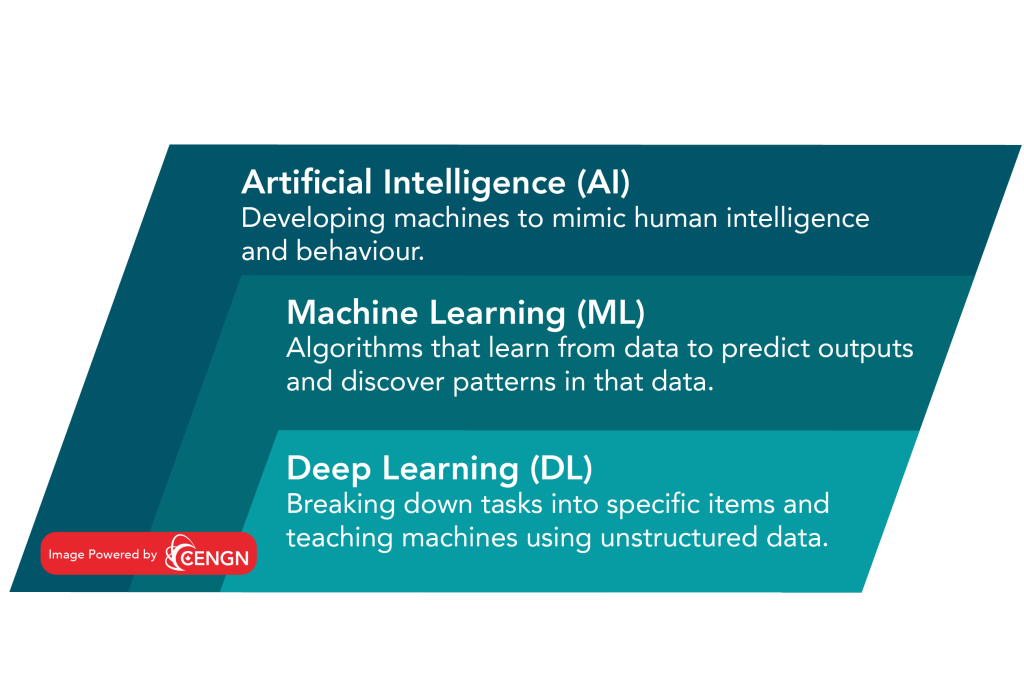
Machine learning is a subset of artificial intelligence that focuses on developing algorithms and models that enable computers to learn from data and make predictions or decisions without being explicitly programmed. In machine learning, algorithms are trained on labelled data to identify patterns and relationships, which are then used to make informed decisions when presented with new data.
Deep Learning
Deep learning is a more advanced form of machine learning that utilises artificial neural networks to mimic the way the human brain processes information. These neural networks consist of multiple layers of interconnected nodes that can extract features from raw data and learn complex patterns. Deep learning excels at tasks such as image and speech recognition, natural language processing, and autonomous driving.
The Key Differences
- Data Representation: Machine learning typically relies on feature engineering where humans manually select relevant features for training models. In contrast, deep learning automatically learns hierarchical representations from raw data.
- Performance: Deep learning models often outperform traditional machine learning algorithms in tasks involving large amounts of unstructured data due to their ability to learn intricate patterns.
- Computational Resources: Deep learning models require significant computational power and large datasets for training, making them more resource-intensive compared to many machine learning algorithms.
- Interpretability: Machine learning models are generally more interpretable as they rely on explicit features selected by humans. Deep learning models, however, are often considered black boxes due to their complex architectures.
In conclusion, while both machine learning and deep learning play vital roles in advancing artificial intelligence capabilities, it is essential to understand their nuances and applications to leverage their strengths effectively in various domains.
Mastering Deep Learning: 7 Essential Tips for Success in Machine Learning
- Understand the basics of machine learning before diving into deep learning.
- Choose the right framework and tools for your deep learning project.
- Preprocess and clean your data effectively to improve model performance.
- Experiment with different architectures and hyperparameters to optimize your deep learning models.
- Regularly update and fine-tune your models to prevent overfitting.
- Stay updated with the latest research and advancements in the field of deep learning.
- Collaborate with peers, participate in competitions, and work on real-world projects to enhance your skills.
Understand the basics of machine learning before diving into deep learning.
Before delving into deep learning, it’s essential to grasp the fundamentals of machine learning. Machine learning provides the foundational concepts and techniques that underpin more advanced methods, such as deep learning. By understanding basic principles like supervised and unsupervised learning, model evaluation, and feature selection, one can develop a solid framework for tackling complex problems. This foundational knowledge not only aids in comprehending how deep neural networks function but also enhances one’s ability to choose appropriate algorithms and architectures for specific tasks. Moreover, having a strong grasp of machine learning basics enables individuals to better interpret results and troubleshoot models effectively, ensuring a smoother transition into the intricate world of deep learning.
Choose the right framework and tools for your deep learning project.
When embarking on a deep learning project, it is crucial to select the appropriate framework and tools to ensure its success. Choosing the right framework can significantly impact the efficiency, scalability, and performance of your project. Different frameworks offer various features, support different programming languages, and cater to specific use cases. By carefully evaluating your project requirements and selecting the most suitable tools, you can streamline development processes, optimise model performance, and ultimately achieve your deep learning objectives effectively.
Preprocess and clean your data effectively to improve model performance.
Preprocessing and cleaning data effectively is a crucial step in enhancing the performance of machine learning and deep learning models. Raw data often contains noise, missing values, and inconsistencies that can adversely affect the accuracy and reliability of predictive models. By meticulously cleaning the data, such as handling missing values, removing duplicates, normalising features, and encoding categorical variables, one ensures that the model learns from high-quality inputs. Effective preprocessing also involves feature selection and extraction to highlight the most relevant information for the model. This not only improves model performance but also reduces computational costs by eliminating unnecessary complexity. Consequently, investing time in thorough data preprocessing lays a solid foundation for building robust and accurate machine learning and deep learning models.
Experiment with different architectures and hyperparameters to optimize your deep learning models.
To enhance the performance of your deep learning models, it is advisable to experiment with various architectures and hyperparameters. By exploring different configurations, such as adjusting the number of layers, nodes, activation functions, and learning rates, you can fine-tune your model to achieve optimal results. This process of hyperparameter tuning allows you to identify the most effective settings that maximise accuracy and efficiency in training your deep learning algorithms.
Regularly update and fine-tune your models to prevent overfitting.
To ensure the optimal performance of your machine learning and deep learning models, it is crucial to regularly update and fine-tune them. This practice helps prevent overfitting, a common issue where the model performs well on training data but struggles with new, unseen data. By continuously refining your models with updated data and adjusting parameters, you can enhance their generalisation capabilities and maintain their accuracy and reliability in real-world applications.
Stay updated with the latest research and advancements in the field of deep learning.
To stay at the forefront of developments in deep learning, it is crucial to remain abreast of the latest research and advancements in the field. Keeping up-to-date with emerging trends, novel techniques, and breakthroughs in deep learning not only enhances one’s knowledge but also ensures that one can leverage cutting-edge tools and methodologies to tackle complex problems effectively. Continuous learning and staying informed about the rapidly evolving landscape of deep learning are essential for professionals seeking to drive innovation and make significant contributions to the field.
Collaborate with peers, participate in competitions, and work on real-world projects to enhance your skills.
Collaborating with peers, engaging in competitions, and undertaking real-world projects are invaluable strategies for honing your skills in machine learning and deep learning. By working alongside others in the field, you can benefit from diverse perspectives, share knowledge, and tackle challenges collectively. Participating in competitions not only provides a platform to test your abilities but also exposes you to different problem-solving approaches. Moreover, taking on real-world projects allows you to apply theoretical concepts to practical scenarios, gaining hands-on experience and enhancing your problem-solving capabilities. Embracing these collaborative opportunities can significantly elevate your proficiency and understanding in the dynamic realms of machine learning and deep learning.