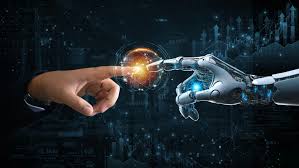
Latest Technologies Transforming Our World
In today’s rapidly advancing world, technology continues to evolve at an unprecedented pace. From artificial intelligence to quantum computing, the latest technological innovations are reshaping industries and redefining our daily lives. Here are some of the most exciting technologies making waves in 2023.
Artificial Intelligence and Machine Learning
Artificial Intelligence (AI) and Machine Learning (ML) remain at the forefront of technological advancement. These technologies have made significant strides in recent years, enhancing everything from healthcare diagnostics to personalised marketing strategies. AI-driven chatbots and virtual assistants are becoming increasingly sophisticated, providing businesses with efficient customer service solutions.
Quantum Computing
Quantum computing is poised to revolutionise the way we process information. Unlike classical computers that use bits as units of data, quantum computers use qubits, allowing them to perform complex calculations at unprecedented speeds. This technology holds promise for breakthroughs in fields such as cryptography, material science, and drug discovery.
5G Connectivity
The rollout of 5G networks is transforming how we connect to the internet. With faster speeds and lower latency than its predecessors, 5G enables seamless streaming, improved mobile gaming experiences, and enhanced connectivity for smart devices. This technology is also expected to drive advancements in autonomous vehicles and smart cities.
Augmented Reality (AR) and Virtual Reality (VR)
AR and VR technologies are no longer confined to gaming; they are now being integrated into various sectors including education, healthcare, and retail. AR applications allow users to overlay digital information onto the real world, while VR provides immersive experiences that can simulate real-world environments for training or entertainment purposes.
The Internet of Things (IoT)
The Internet of Things continues to expand as more devices become interconnected. IoT technology enables smart homes where appliances can be controlled remotely via smartphones or voice commands. In industrial settings, IoT devices facilitate predictive maintenance and optimise supply chain operations.
Sustainable Technology Innovations
Sustainability has become a key focus for technological development. Innovations such as solar energy advancements, electric vehicles with longer ranges, and biodegradable materials are contributing towards a greener future. These technologies aim to reduce our environmental impact while meeting global energy demands.
The rapid evolution of these technologies underscores the importance of staying informed about emerging trends that have the potential to transform industries and improve quality of life worldwide.
Exploring the Latest Technological Innovations: 9 Key Questions Answered
- What is artificial intelligence and how is it being used in various industries?
- How does quantum computing differ from traditional computing, and what are its potential applications?
- What are the benefits of 5G connectivity compared to previous generations of mobile networks?
- How are augmented reality (AR) and virtual reality (VR) technologies enhancing user experiences?
- What security concerns arise with the proliferation of Internet of Things (IoT) devices?
- How can businesses leverage machine learning algorithms to improve decision-making processes?
- What sustainable technology innovations are making a significant impact on environmental conservation?
- What challenges need to be addressed for widespread adoption of autonomous vehicles powered by AI?
- How do advancements in biotechnology, such as gene editing tools, influence healthcare and agriculture?
What is artificial intelligence and how is it being used in various industries?
Artificial intelligence (AI) refers to the simulation of human intelligence processes by machines, particularly computer systems. These processes include learning, reasoning, problem-solving, perception, and language understanding. AI is being utilised across various industries to enhance efficiency and innovation. In healthcare, AI algorithms assist in diagnosing diseases more accurately and swiftly by analysing medical images and patient data. The finance sector employs AI for fraud detection and to provide personalised banking experiences through chatbots. In the automotive industry, AI powers autonomous vehicles by enabling them to navigate complex environments safely. Retail businesses use AI for inventory management and to deliver personalised shopping experiences through recommendation engines. Additionally, in manufacturing, AI optimises production lines with predictive maintenance and quality control systems. As AI technology continues to advance, its applications are expected to expand further across different sectors, driving significant transformations in how businesses operate.
How does quantum computing differ from traditional computing, and what are its potential applications?
Quantum computing represents a paradigm shift from traditional computing by harnessing the principles of quantum mechanics to process information. Unlike classical computers that use bits as units of data represented by 0s and 1s, quantum computers leverage qubits, which can exist in multiple states simultaneously due to superposition and entanglement. This enables quantum computers to perform complex calculations exponentially faster than classical computers for certain problems. The potential applications of quantum computing are vast, ranging from cryptography and secure communications to drug discovery, optimisation problems, and material science. Quantum computing has the potential to revolutionise industries by solving complex problems that are currently intractable with classical computing methods.
What are the benefits of 5G connectivity compared to previous generations of mobile networks?
The benefits of 5G connectivity compared to previous generations of mobile networks are substantial. 5G offers significantly faster data speeds, lower latency, and increased network capacity, allowing for seamless streaming, quicker downloads, and improved overall user experience. With 5G, users can enjoy enhanced connectivity for a wide range of applications, including augmented reality (AR), virtual reality (VR), and Internet of Things (IoT) devices. The technology also paves the way for advancements in areas such as autonomous vehicles, remote healthcare services, and smart city infrastructure. Overall, 5G represents a transformative leap in mobile network technology that promises to revolutionise how we connect and interact in our increasingly digital world.
How are augmented reality (AR) and virtual reality (VR) technologies enhancing user experiences?
Augmented Reality (AR) and Virtual Reality (VR) technologies are revolutionising user experiences across various industries by creating immersive and interactive environments. AR overlays digital information onto the real world, enhancing users’ perception of their surroundings and providing valuable contextual information in fields such as navigation, education, and retail. On the other hand, VR transports users to entirely virtual environments, allowing for realistic simulations and experiences that would otherwise be impossible. From interactive training simulations to engaging entertainment applications, AR and VR technologies are enriching user experiences by bridging the gap between the physical and digital worlds, offering unparalleled levels of engagement and interactivity.
What security concerns arise with the proliferation of Internet of Things (IoT) devices?
With the proliferation of Internet of Things (IoT) devices, various security concerns have emerged as a significant challenge. One primary issue is the vulnerability of IoT devices to cyber attacks due to inadequate security measures and outdated software. Hackers can exploit these weaknesses to gain unauthorised access to sensitive data or even take control of connected devices. Additionally, the sheer volume of interconnected devices increases the potential attack surface, making it harder to monitor and secure every entry point. Ensuring robust encryption protocols, regular software updates, and authentication mechanisms are crucial steps towards mitigating the security risks associated with the expanding IoT ecosystem.
How can businesses leverage machine learning algorithms to improve decision-making processes?
Businesses can harness the power of machine learning algorithms to enhance their decision-making processes in various ways. By utilising machine learning models, organisations can analyse vast amounts of data to uncover valuable insights and patterns that may not be apparent through traditional methods. These algorithms can help businesses make more accurate predictions, optimise resource allocation, identify trends, and streamline operations. Through continuous learning and adaptation, machine learning enables companies to make data-driven decisions that drive efficiency, innovation, and competitive advantage in today’s dynamic business landscape.
What sustainable technology innovations are making a significant impact on environmental conservation?
Sustainable technology innovations are playing a crucial role in environmental conservation by offering solutions that reduce our carbon footprint and promote eco-friendly practices. In recent years, advancements in solar energy technologies have revolutionised the renewable energy sector, making solar power more efficient and affordable. Electric vehicles with extended ranges are also making a significant impact by reducing greenhouse gas emissions from traditional transportation methods. Furthermore, the development of biodegradable materials is addressing the issue of plastic pollution and promoting a more sustainable approach to manufacturing. These innovative technologies are not only helping to preserve our environment but also paving the way towards a greener and more sustainable future for generations to come.
What challenges need to be addressed for widespread adoption of autonomous vehicles powered by AI?
The widespread adoption of autonomous vehicles powered by AI faces several significant challenges that need to be addressed. One of the primary concerns is ensuring safety and reliability, as these vehicles must be capable of operating seamlessly in diverse and unpredictable environments. This requires extensive testing and validation to guarantee that AI systems can handle complex driving scenarios and make split-second decisions. Additionally, regulatory frameworks must be developed to address legal and ethical issues, such as liability in the event of accidents. Public trust is another crucial factor; people need assurance that autonomous vehicles are safe and secure from cyber threats. Infrastructure also poses a challenge, as roads and communication networks may need upgrades to support vehicle-to-infrastructure communication. Finally, there are economic implications, including potential job displacement within the transport sector, which must be managed carefully to ensure a smooth transition to this transformative technology.
How do advancements in biotechnology, such as gene editing tools, influence healthcare and agriculture?
Advancements in biotechnology, particularly in gene editing tools, are revolutionising both healthcare and agriculture. In healthcare, gene editing technologies like CRISPR-Cas9 offer unprecedented precision in targeting and modifying genetic material, opening up new possibilities for treating genetic disorders and diseases. These tools hold the potential to develop personalised therapies tailored to individual patients, leading to more effective treatments with fewer side effects. In agriculture, gene editing allows for the creation of crops with enhanced traits such as disease resistance, improved nutritional content, and increased yields. By harnessing these technologies, farmers can cultivate more resilient crops that are better equipped to withstand environmental challenges, ultimately contributing to global food security and sustainability efforts.